


 Secure and Reliable
  High quality
  Worldwide shipping
  Bonuses and Discounts
  Money back Guarantee
 - Bestsellers
- Alcoholism
- COVID-19
- Allergy
- Anti Fungal
- Alzheimers
- Anti Viral
- Anti-Depressants
- Anti-Inflammatory
- Antibacterial
- Antiparasitic
- Antibiotics
- Arthritis
- Asthma
- Birth Control
- Blood Pressure
- Cancer
- Cardiovascular
- Cholesterol
- Diabetes
- Diuretics
- Erectile Dysfunction
- Eye Drop
- Gastro Health
- General Health
- Hair Loss
- Hepatitis C Virus (HCV)
- HIV
- Hormones
- Men's ED Packs
- Men's Health
- Mental Illness
- Motion Sickness
- Muscle Relaxant
- Pain Relief
- Parkinson’s Disease
- Veterinary Medicines
- Quit Smoking
- Vitamins
- Skin Care
- Sleeping Aids
- Weight Loss
- Women's Health
Generic Tasigna ( Nilotinib )
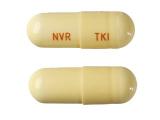
Tasigna (nilotinib) is a tyrosine kinase inhibitor indicated for the treatment of adult patients with newly diagnosed Philadelphia chromosome positive chronic myeloid leukemia (CML) in chronic phase, and for adult patients with chronic or accelerated phase CML who are resistant or intolerant to prior therapy including imatinib. Nilotinib works by selectively inhibiting the BCR‑ABL tyrosine kinase, the abnormal enzyme produced by the Philadelphia chromosome, as well as other kinases such as PDGFR and c‑KIT. By blocking these signalling pathways, Tasigna prevents the uncontrolled proliferation of leukemic cells. It is a second‑generation BCR‑ABL inhibitor with higher potency than imatinib.
Usual adult dose: For newly diagnosed chronic phase CML, the recommended dose is 300 mg twice daily, taken orally approximately 12 hours apart. For patients with chronic or accelerated phase CML resistant or intolerant to prior therapy, the dose is 400 mg twice daily. The 150 mg and 200 mg capsule strengths are used to construct these doses: 300 mg is achieved with two 150 mg capsules twice daily, and 400 mg is achieved with two 200 mg capsules twice daily. Capsules must be swallowed whole with water and taken on an empty stomach; food significantly increases the absorption of nilotinib and may increase the risk of side effects. Patients should not eat for at least 2 hours before and at least 1 hour after taking a dose. If a dose is missed, the patient should take the next dose at the usual time; two doses must not be taken at the same time. Dose adjustments may be required for QT prolongation, myelosuppression, or hepatic impairment. The tablets/capsules should not be opened or crushed.
Dosage form: Hard gelatin capsules: 150 mg (red/white, size 1) and 200 mg (light blue/white, size 0). Available in blister packs of 28 or 30 capsules.
Onset of action: Peak plasma concentrations are reached approximately 3 hours after oral administration. Steady‑state plasma levels are achieved by day 8 of twice‑daily dosing. Hematologic response in newly diagnosed CML is typically observed within the first 1 to 3 months, with major molecular response developing over 12 to 18 months of continuous therapy.
Duration of action: The elimination half‑life of nilotinib is approximately 17 hours, supporting a twice‑daily dosing schedule. Therapeutic effect is maintained with continuous daily treatment; discontinuation can lead to disease recurrence and is considered only in selected patients with deep and sustained molecular response under specialist supervision.
Alcohol recommendation: Alcohol should be avoided during treatment with Tasigna. Alcohol may increase the risk of hepatotoxicity and can exacerbate gastrointestinal side effects. Nilotinib can prolong the QT interval, and excessive alcohol consumption may further increase the risk of cardiac arrhythmias. Patients should be counselled to abstain from alcohol while on this medication.
Most common side effects: Rash, pruritus, headache, nausea, fatigue, myalgia, constipation, diarrhea, and peripheral edema. Myelosuppression, including thrombocytopenia, neutropenia, and anemia, is common and requires regular complete blood count monitoring, especially during the first few months of therapy. Nilotinib can cause prolongation of the QT interval; an electrocardiogram should be obtained at baseline and periodically thereafter, and the drug should be used with caution in patients with a history of QT prolongation or those taking other QT‑prolonging drugs. Metabolic abnormalities include hyperglycemia and hyperlipidemia; fasting glucose and lipid profiles should be monitored. Serious vascular events, including peripheral arterial occlusive disease, ischemic heart disease, and cerebrovascular events, have been reported with nilotinib; patients with cardiovascular risk factors require close monitoring. Hepatotoxicity, pancreatitis, and fluid retention have also been observed. Tumour lysis syndrome may occur in patients with high tumour burden; adequate hydration and uric acid control are important. Women of childbearing potential must use effective contraception during treatment and for at least 14 days after the last dose, as nilotinib may cause fetal harm. Tasigna is available only by prescription and must be prescribed and supervised by a healthcare professional experienced in oncology or hematology.
Would you like to try Tasigna (Nilotinib) without a prescription?
+ Package delivery insurance
+ Next orders 10% discount

+ Package delivery insurance
+ Next orders 10% discount
+ Package delivery insurance
+ Next orders 10% discount
+ Package delivery insurance
+ Next orders 10% discount
Buy Generic Tasigna (Nilotinib) without prescription at Canadian Pharmacy
At our pharmacy, you can buy Tasigna without a prescription, with discreet and anonymous packaging delivered within 5-14 days across Canada.
What is Tasigna?
Tasigna is a targeted cancer therapy used to treat Philadelphia chromosome-positive chronic myeloid leukemia (CML). The active ingredient is nilotinib, a tyrosine kinase inhibitor that blocks the abnormal BCR-ABL protein produced by the Philadelphia chromosome. This protein tells white blood cells to multiply without control. Tasigna binds to the protein and shuts it off. The overproduction of abnormal white cells stops, and the disease goes into remission. It is used for both newly diagnosed chronic phase CML and for patients who have become resistant or intolerant to imatinib (Gleevec).
Tasigna does not cure CML in most patients, but it can keep the disease under control for many years. It is a daily oral capsule taken on an empty stomach. The standard dose is 300 mg twice daily for newly diagnosed patients, and 400 mg twice daily for resistant or intolerant cases. The capsules come in two strengths: 150 mg and 200 mg. The 150 mg capsule is used primarily for patients who need a reduced dose because of side effects or liver problems. The 200 mg capsule is the standard building block for the full dose. Both strengths are taken in combinations that make up the prescribed total daily amount.
Mechanism and Pharmacology
Nilotinib is a second-generation BCR-ABL tyrosine kinase inhibitor. It binds to the ATP-binding site of the BCR-ABL protein, preventing it from attaching phosphate groups to other proteins. This blocks the downstream signalling that drives the uncontrolled growth of leukemia cells. Nilotinib was designed to be more selective and more potent than imatinib. It is effective against many imatinib-resistant mutations, though not all. It also inhibits other kinases, including KIT and PDGFRA, but its main clinical impact is against BCR-ABL. Nilotinib induces apoptosis, programmed cell death, of the abnormal cells, allowing normal blood cell production to recover.
Absorption of nilotinib is highly dependent on food. Taking it with a meal, especially a fatty one, can increase blood levels dramatically, raising the risk of serious side effects, particularly heart rhythm problems. This is why the drug must be taken on an empty stomach. No food for at least 2 hours before and at least 1 hour after each dose. Peak plasma levels are reached about 3 hours after dosing. Nilotinib is metabolized in the liver, primarily by CYP3A4. The half-life is about 17 hours, allowing for twice-daily dosing. Steady-state is reached in about 8 days. The drug is eliminated mainly in the feces. Dose adjustment is required in moderate to severe liver impairment. Kidney function does not significantly affect nilotinib levels, but the drug can cause kidney injury, so monitoring is necessary. Nilotinib can prolong the QT interval on the electrocardiogram, which can lead to serious arrhythmias. This is why electrolyte levels and ECGs are monitored before and during treatment.
How to Use Tasigna
Take Tasigna capsules on an empty stomach. Wait at least 2 hours after a meal before taking a dose, and do not eat for at least 1 hour after. Water is allowed, but no coffee, tea, juice, or milk during that window. This is not a flexible rule. Breaking it can cause dangerous increases in drug levels and heart problems. Swallow the capsules whole with water. Do not open, break, or chew them. If you have difficulty swallowing, do not try to dissolve the contents without specific medical advice.
The typical dose for newly diagnosed chronic phase CML is 300 mg taken twice daily, roughly 12 hours apart. This means two 150 mg capsules twice daily, or one 200 mg and one 100 mg (but 100 mg is not available, so the 150 mg strength is used). For resistant or intolerant patients, the dose is 400 mg twice daily, meaning two 200 mg capsules twice daily. Your doctor will tell you exactly how many capsules to take. If a dose is reduced because of side effects, the 150 mg strength allows fine-tuning. Always take the capsules at the same times each day. If you miss a dose, take it as soon as you remember, but if it is almost time for the next dose, skip the missed one. Do not double up. If you vomit after taking a dose, do not take extra. Continue with the next scheduled dose.
Because nilotinib can prolong the QT interval and cause sudden cardiac death, you must have regular ECGs. Electrolytes, especially potassium and magnesium, are checked and corrected if low. Avoid medications that also prolong the QT interval. Grapefruit and grapefruit juice are absolutely forbidden. They strongly inhibit CYP3A4 and can cause a sudden dangerous spike in nilotinib levels. Blood tests for liver function, kidney function, and blood counts are done regularly. The dose may be held or reduced if blood counts drop too low or if liver enzymes rise significantly. Never stop Tasigna without talking to your oncologist. Stopping can allow the leukemia to return.
Side Effects of Tasigna
The most serious side effect is QT interval prolongation, which can lead to a life-threatening arrhythmia called torsades de pointes. This is why ECGs are monitored, electrolytes are checked, and drugs that prolong the QT interval are avoided. Symptoms of an arrhythmia include fainting, palpitations, or a rapid, irregular heartbeat. Seek emergency care if these occur. Another serious concern is liver toxicity. Nilotinib can cause severe hepatitis and, rarely, liver failure. Liver enzymes are monitored closely. Symptoms include yellowing of the skin, dark urine, and severe abdominal pain. If these appear, stop the drug and call your doctor immediately.
Cardiovascular events, including heart attack, stroke, and peripheral arterial disease, occur at a higher rate with nilotinib than with imatinib. This is a long-term risk. Patients with pre-existing heart disease or risk factors like diabetes, high cholesterol, or smoking should be monitored carefully. Some patients develop high blood sugar or high cholesterol. These are managed with diet and medication. Common but less serious side effects include rash, itching, headache, fatigue, nausea, diarrhea, and constipation. Muscle cramps and joint pain are also frequent. Low blood counts, including neutropenia, thrombocytopenia, and anemia, are expected, especially in the first months. The dose may be adjusted based on counts. Fluid retention, especially around the eyes or in the legs, can occur but is less common than with imatinib. Hair thinning may happen but is usually mild.
High-Risk Groups (Elderly, Pregnancy)
Pregnancy. Nilotinib is pregnancy category D. It can cause serious birth defects and fetal loss. It should not be used during pregnancy. Women of childbearing age must use effective contraception during treatment and for at least two weeks after the last dose. If pregnancy occurs, the patient must be informed of the risk. Breastfeeding is not recommended while taking Tasigna, as the drug may pass into breast milk and harm the infant.
Elderly patients can use Tasigna without dose adjustment for age alone. However, older adults are more likely to have heart disease, liver or kidney problems, and electrolyte imbalances, which increase the risk of serious side effects. ECGs and electrolyte monitoring are especially important. The starting dose may be the same, but more frequent dose adjustments may be needed. Patients with moderate to severe liver impairment require a lower dose, often 300 mg once daily, because the drug is metabolized by the liver. Kidney function does not require a dose change, but serum creatinine and urine protein are monitored. Patients with a history of heart rhythm problems, heart attack, stroke, or uncontrolled high blood pressure need careful evaluation before starting. The 150 mg capsule is often used for dose reduction in these high-risk groups.
Interaction With Activities (Driving, Alcohol)
Tasigna can cause fatigue, dizziness, and visual changes. If you feel tired or your vision is blurry, don't drive. The drug can also cause a sudden drop in blood pressure or fainting due to heart rhythm problems. If you experience palpitations, lightheadedness, or fainting, do not drive and seek medical attention. Alcohol should be limited or avoided. Alcohol can worsen liver irritation, add to the fatigue, and increase the risk of heart rhythm problems. Heavy drinking is strongly discouraged. If you drink, keep it light and tell your oncologist. Grapefruit and grapefruit juice must be avoided entirely, as they can cause a dangerous spike in drug levels.
Drug Interactions
Nilotinib is metabolized by CYP3A4. Strong inhibitors of this enzyme, like ketoconazole, itraconazole, clarithromycin, and ritonavir, can increase nilotinib levels and the risk of serious side effects, especially QT prolongation. Strong inducers, like rifampin, phenytoin, and St. John's Wort, can lower nilotinib levels and reduce its effectiveness. These combinations should be avoided. Nilotinib itself inhibits several CYP enzymes and can increase levels of drugs metabolized by them, such as simvastatin, cyclosporine, and warfarin. Doses may need adjustment. Warfarin and other anticoagulants increase the risk of bleeding, and INR should be monitored closely. Drugs that prolong the QT interval, such as certain antiarrhythmics, antipsychotics, and macrolide antibiotics, must be avoided because of additive risk. This is a critical interaction. Proton pump inhibitors and other acid-reducing agents do not significantly affect nilotinib absorption, because the drug is not acid-dependent. However, it is still best to separate doses. Always tell your oncologist about every medication, supplement, and herbal product you take before starting Tasigna.
Alternative Options
For chronic myeloid leukemia, the treatment landscape includes several tyrosine kinase inhibitors. Imatinib (Gleevec) is the first-generation drug and remains a standard first-line option. Dasatinib (Sprycel) is another second-generation drug with a different side effect profile, particularly more pleural effusions. Bosutinib (Bosulif) is used for patients who cannot tolerate other drugs. Ponatinib (Iclusig) is used for the T315I mutation, which is resistant to nilotinib. The choice depends on the specific BCR-ABL mutation, the patient's cardiovascular risk, and side effect tolerance. Nilotinib is more potent than imatinib and achieves deeper molecular responses, but it carries a higher risk of cardiovascular events. For many patients, the choice between nilotinib, dasatinib, and imatinib is based on individual risk factors. Newer agents like asciminib (Scemblix) target a different site on the BCR-ABL protein and are used for resistant disease. The goal is to achieve a deep molecular response that can eventually allow treatment-free remission in a minority of patients.
INN, Brand Names, and Classification in Canada
INN (International Nonproprietary Name): Nilotinib hydrochloride
Available brand names in Canada: Tasigna, and generic nilotinib
ATC code: L01EA03
Forms and strengths: Capsules 150 mg and 200 mg. The 150 mg capsule is used for reduced dosing and for the 300 mg twice-daily regimen. The 200 mg capsule is used for the 400 mg twice-daily regimen.
Manufacturers: Novartis Pharmaceuticals Canada Inc. (Tasigna), and generic manufacturers including Apotex Inc. and Teva Canada Limited.
Registration status in Canada: Registered
Classification: Prescription (Rx)
Frequently Asked Questions
Why must I take Tasigna on an empty stomach?
Food, especially fat, can more than double the amount of drug absorbed into your blood. This can cause dangerous spikes in drug levels, leading to heart rhythm problems. The empty stomach rule is absolute. Wait at least 2 hours after eating, and do not eat for at least 1 hour after a dose. Water is allowed, but nothing else.
What is the QT interval and why do I need ECGs?
The QT interval is a measurement on your electrocardiogram that reflects how long it takes your heart to recharge between beats. Nilotinib can lengthen this interval, which can cause a dangerous arrhythmia. Regular ECGs and monitoring of potassium and magnesium levels help detect and prevent this.
Can I stop taking Tasigna once my blood counts are normal?
Stopping is possible for some patients in deep molecular remission, but only under strict medical supervision. This is called treatment-free remission. Do not stop on your own. The leukemia can return, sometimes quickly. Your doctor will tell you when and if it is safe to consider stopping.
Will I lose my hair?
Hair thinning is uncommon with nilotinib, but some patients notice it. It is usually mild and reversible. It is not the complete hair loss typically seen with chemotherapy.
Can I take Tasigna with grapefruit juice?
No. Grapefruit and grapefruit juice block the enzyme that breaks down nilotinib, causing a sudden dangerous rise in blood levels. Avoid grapefruit entirely during treatment.
Delivery Information Across Canada
We ship Tasigna and generic nilotinib to all provinces and territories. Delivery times vary depending on how remote your location is:
- Ontario (Toronto, Ottawa, Mississauga): 5 to 7 days
- Quebec (Montreal, Quebec City, Laval): 5 to 7 days
- British Columbia (Vancouver, Victoria, Burnaby): 5 to 9 days
- Alberta (Calgary, Edmonton, Red Deer): 5 to 9 days
- Manitoba (Winnipeg, Brandon): 5 to 9 days
- Saskatchewan (Saskatoon, Regina): 5 to 9 days
- Nova Scotia (Halifax, Sydney): 5 to 9 days
- New Brunswick (Moncton, Fredericton): 5 to 9 days
- Newfoundland and Labrador (St. John's, Corner Brook): 7 to 14 days
- Prince Edward Island (Charlottetown): 7 to 14 days
- Yukon, Northwest Territories, Nunavut: 7 to 14 days
All shipments are packed discreetly with no branding or indication of contents on the outside.
How to buy Generic Tasigna (Nilotinib) no prescription from Canadian Pharmacy.
| Shipping method | Delivery time | Price | |
 Delivery Delivery |
14-21 days | 14.95$ | Tracking# available in 4 days |
 Delivery Delivery |
9-14 days | 30$ | Tracking# available in 2 days |


- Shipping worldwide
- Confidentiality and anonymity guarantee
- Safe and secure
- Discrete looking packages
- Dispatch orders within 24 hours
- 100% success delivery


